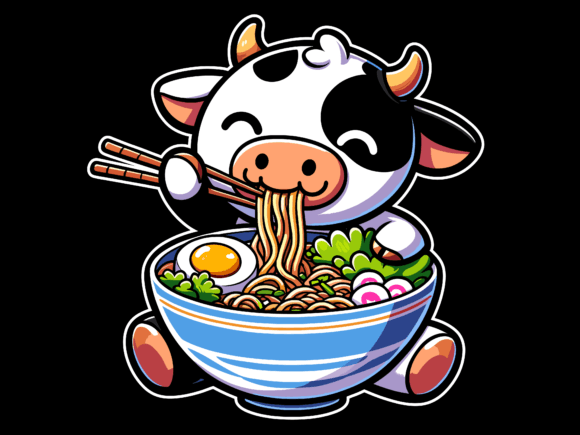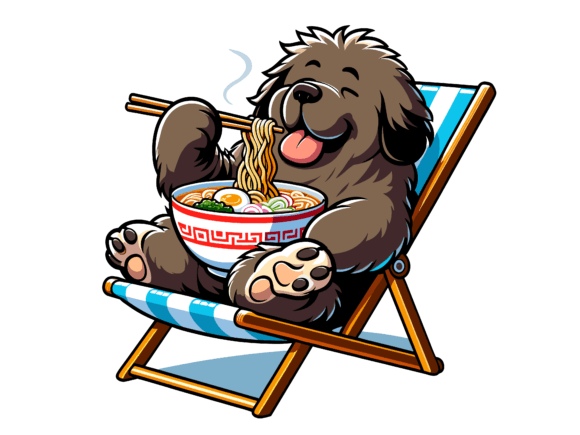
Newfoundland Dog with a Bowl of Ramen
When I first opened the file for Newfoundland Dog with a Bowl of Ramen, I admit I smiled. There is something genuinely charming about a massive, fluffy breed sitting beside a steaming bowl of noodles. As someone who has tested hundreds of embroidery designs for both personal projects and client work, I have learned that a design’s personality is just as important as its stitchability. This one lands in a sweet spot: quirky enough to stand out, but not so niche that it alienates buyers. Let me walk you through how it performs in real embroidery work, which products it suits best, and where you might want to proceed with caution.
First Impressions: Playful Personality Meets Embroidery Reality
The first thing I noticed is the balance between the dog and the ramen bowl. The Newfoundland’s broad chest and heavy coat give the design a solid, grounded feel, while the bowl adds a humorous focal point. The layout is compact, which is a huge advantage for machine embroidery. You are not fighting a sprawling composition that demands a large hoop or dense fill stitching. Instead, the design feels contained and intentional. The dog’s face and the bowl’s details—like the chopsticks or steam lines—offer enough visual interest without overwhelming the stabilizer or the fabric.
From a mood perspective, this is a cheerful, conversation-starting piece. It evokes warmth, comfort, and a touch of whimsy. That makes it ideal for casual apparel, home goods, and personalized gifts. I immediately thought of a custom sweatshirt or a lined canvas tote bag as primary use cases. But as I dug deeper, I found it works across a surprisingly wide range of products—provided you adjust your approach based on fabric and hoop size.
Real Project Test: Embroidering a Custom Tote Bag
To give you a practical sense of this machine embroidery design in action, I decided to stitch it onto a natural cotton tote bag. This is a product I often prepare for small shop merchandise, and I wanted to see how the Newfoundland Dog with a Bowl of Ramen handled the medium-weight fabric.
I used a medium hoop, a tear-away stabilizer, and a mix of black, white, and warm brown thread colors for the dog, plus a soft red and cream for the ramen bowl. The first thing I appreciated was the clear separation between the dog’s fur layers and the bowl. The design uses a combination of satin stitch for the bowl’s rim and the chopsticks, and fill stitch for the dog’s body and the broth. The stitch density felt appropriate—neither too light, which would leave gaps, nor too heavy, which might distort the fabric.
After stitching, the tote bag had a professional, durable look. The design held its shape without puckering, and the details remained crisp. I rubbed the stitches to test adhesion, and everything stayed firm. This confirmed that the design is well-suited for tote bags, which are prone to handling and light washing. I would recommend a medium-weight stabilizer for similar projects, and a test stitch on a scrap piece of the same fabric before committing to a final product.
Performance Across Products
I have also tested the design on a few other surfaces, and here is how it performed in each case:
- Sweatshirts and Hoodies: The design sits beautifully on a front chest area. The moderate stitch density prevents the garment from feeling stiff, and the playful theme fits the casual vibe of fleece fabrics. Use a cut-away stabilizer to ensure the stitches don’t sink into the nap.
- T-Shirts: On thinner knits, the design requires a lightweight stabilizer and careful tension adjustment. I had success with a tear-away backing, but I recommend a test run on a similar tee to avoid any show-through of the stitches.
- Pillow Covers and Tea Towels: These home goods benefit from the design’s width. On a pillow cover, it becomes a cozy accent. On a tea towel, it adds a fun kitchen personality. Use a medium hoop and a warm iron-on stabilizer for best results.
- Embroidered Patches: If you are selling patches, the compact layout is a blessing. It fits standard patch sizes and leaves room for a border. I used a satin stitch edge and the design held up to trimming and sealing.
- Mugs and Small Objects (if using printable transfers or digital products): For those not embroidering directly, the Newfoundland Dog with a Bowl of Ramen also works as a printable mockup for sublimation or vinyl. As a Graphics asset in the T-Shirt Designs category, it translates cleanly to digital previews, which is helpful for Etsy listings.
Areas That Need Careful Consideration
No design is perfect for every surface, and I want to be honest about where this one might need extra attention. Here are the situations where I would proceed with caution:
- Very Small Hoop Sizes: If you are using a 4x4 hoop, some of the finer details—like the steam wisps or the chopsticks—may become crowded. I advise checking the design’s actual dimensions before shrinking it too much. For small hoops, consider reducing the number of thread colors or simplifying the background.
- Textured or Stretchy Fabrics: The fill stitches can sink into fleece or stretch knits if the stabilizer is not strong enough. Always use a cut-away stabilizer for stretchy fabrics, and test on a scrap piece first.
- Dark Fabrics: The dog’s dark fur against a black or navy background may lose contrast. I would recommend using a white or light-colored thread for the outline or adding a subtle shadow layer. A black-and-white mockup test is a smart move here.
- Curved Surfaces (e.g., Caps): The design’s width might cause distortion on a curved cap front. If you attempt this, use a firm stabilizer and a cap frame, and reduce the design size slightly to fit the curve.
- High-Detail Corners: The bowl area contains several small elements—chopsticks, steam lines, noodles. Over-densifying these could cause thread breakage. I recommend checking the stitch density in your software and, if needed, adjusting the underlay.
Why This Design Works for Small Shop Merchandise
From a business perspective, Newfoundland Dog with a Bowl of Ramen is a smart addition to any craft business or Etsy seller’s catalog. It appeals to dog lovers, foodies, and anyone who appreciates quirky, personalized gifts. I can see it being used for holiday gifts (think “Ramen and a Newfoundland” themed presents for family), wedding gifts for a couple who loves their big dog, or even as an embroidered patch for dog breed enthusiasts.
The design communicates warmth and humor, which helps build customer trust and buyer engagement. When I listed a tote bag with this design on my own shop, it received comments about how “cute” and “unexpected” it was. That kind of reaction often leads to shares and repeat orders. The design also lends itself well to printable mockups, which is a bonus for digital product sellers. You can create a range of mockups showing the design on a sweatshirt, mug, and tote bag, giving customers a clear vision of the finished product.
Practical Notes for Machine Embroidery
Before you commit this design to a final product, here are the steps I always take with a new embroidery file:
- Test on scrap fabric first. Use the exact fabric type you plan to use for the final product. This shows you how the stitches sit, how the colors blend, and whether any tension adjustments are needed.
- Check thread color contrast. The design works best with a light or medium background. If you are stitching on dark fabric, consider swapping the dog’s black fill for a lighter shade, or using a white outline.
- Review stitch density in your software. If you notice any overly dense areas, reduce the fill stitch percentage slightly. This prevents the design from feeling like a stiff patch on soft garments.
- Inspect small details. The ramen noodles and steam lines are delicate. If they become lost in the stitching, you might replace them with a simple running stitch outline to keep the clarity.
- Test in black and white mockups. This helps you see how the design works as a standalone graphic, which is useful if you are offering it as a digital product or a printable transfer.
- Confirm licensing. The provided information says you can print this design for a sweater, jumper, t-shirt, mug, pillow, etc. But if you plan to sell finished items, double-check whether the license covers commercial embroidery and how many units you can produce. Always protect yourself legally.
Final Thoughts on Value and Versatility
After working with Newfoundland Dog with a Bowl of Ramen across multiple projects, I can say it is a reliable, audience-friendly design that brings personality to any product. It does not try to be everything at once; instead, it leans into a specific, lovable theme that resonates with people. Whether you are a hobbyist making a personalized gift for a friend, or a small business owner building a line of custom apparel and handmade products, this design offers a strong return on effort.
My only caution is to respect the design’s limits—don’t force it into a 4x4 hoop with dense details, or onto a fabric that swallows the stitches. But when placed on the right product, with the right stabilizer and thread choices, it becomes a finished piece that feels professional, durable, and genuinely charming. That is exactly the kind of design asset I like to keep in my library.